Programs in Thousand Oaks
Built around the relationship.
Adaptive riding and Equine Assisted Learning (EAL) give families and community partners a clear way to explore equestrian instruction, horsemanship, and inclusive recreation.
Two ways in
Start where your curiosity feels strongest.
01 / In the saddle
Adaptive Riding
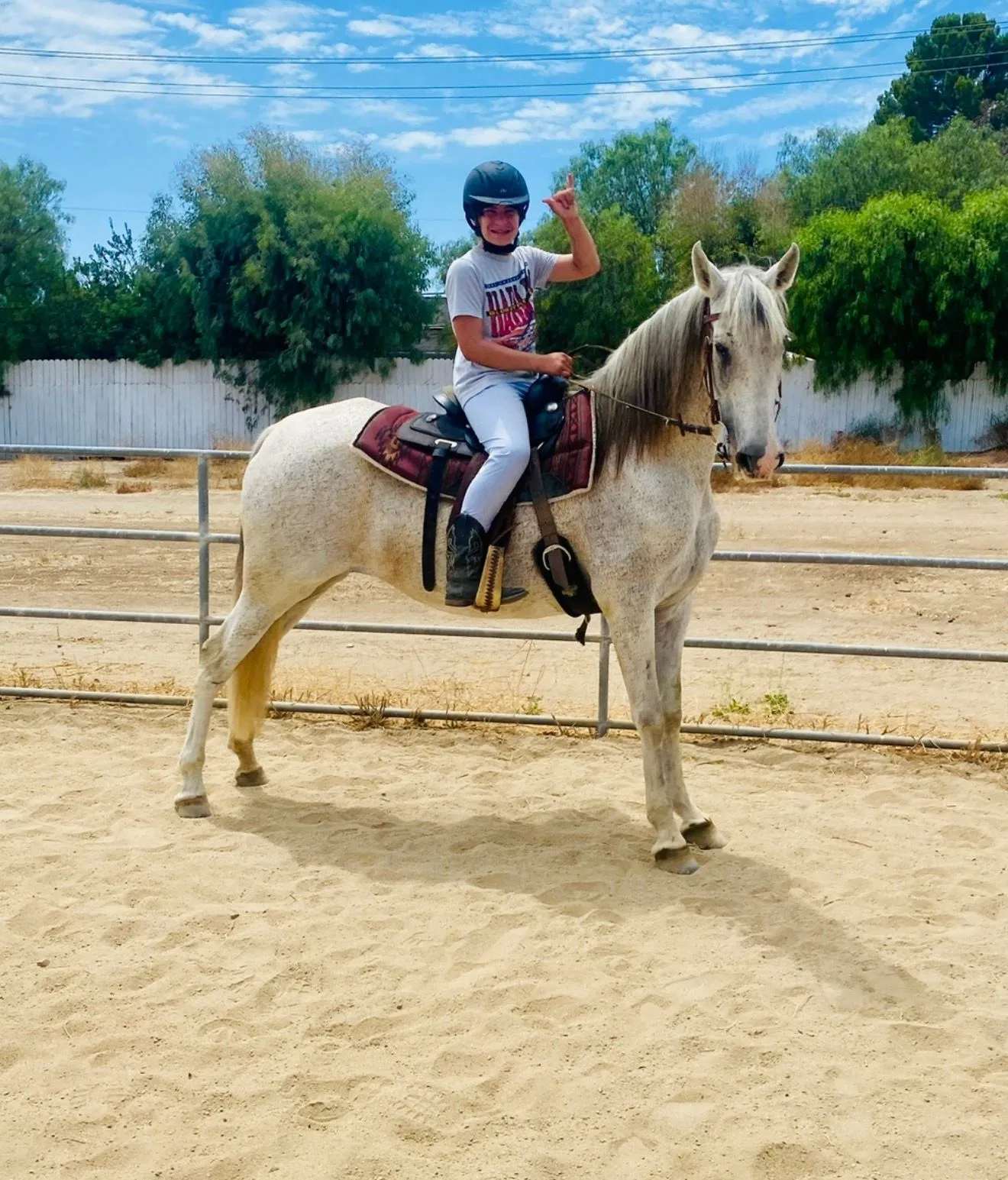
Adaptive riding brings individualized riding instruction and horsemanship together in a structured, welcoming setting. Activities can include mounted exercises, riding patterns, horse handling, grooming, and progressive riding skills.
Who may inquire: Families and individuals exploring adaptive instruction, including people who may face barriers to traditional riding programs.
Next step: Share what you are hoping to explore, along with any riding experience or questions, through the contact form.
02 / From the ground
Equine Assisted Learning (EAL)
Equine Assisted Learning makes space for learning through groundwork, horse care, stable routines, and guided interaction. The experience centers horsemanship, communication, responsibility, confidence-building, and connection.
Who may inquire: Families, educators, schools, and community organizations interested in learning through structured experiences with horses.
Next step: Tell EEF what kind of experience you are exploring so the team can review the message and follow up with current program information.
Our approach
Individual pace. Thoughtful guidance.
EEF’s approach is centered on the actual experience in front of us. Instructors create room for questions, practice, horse care, skill development, and the confidence that can grow through being understood.
Adaptive riding
Equestrian instruction
Horsemanship skills
Inclusive recreation
For families and community partners
Proud vendor of Tri-Counties Regional Center.
Families should discuss eligibility and service authorization with their TCRC service coordinator. EEF does not determine eligibility or guarantee funding.